
Office Snacks for Veterinary Clinics
Your 11am was a routine dental. Your 11:40 was a hit-by-car that came in the back door. It is now 2:15, nobody on the floor has eaten since breakfast, and the one tech who did bring lunch has had it in the fridge for four hours.
Veterinary practices have the hardest eating schedule of any small office we ship to, and the most reason to fix it.
Short answer: office snacks for a veterinary clinic run $199 to $399 a month for a 10 to 15 person team, one box of 150 individually wrapped snacks. Two clinic-specific rules: everything stays sealed and away from treatment areas, and nothing containing chocolate or xylitol goes anywhere an animal could reach it. You pick every item, so both are settled at order time rather than managed daily.
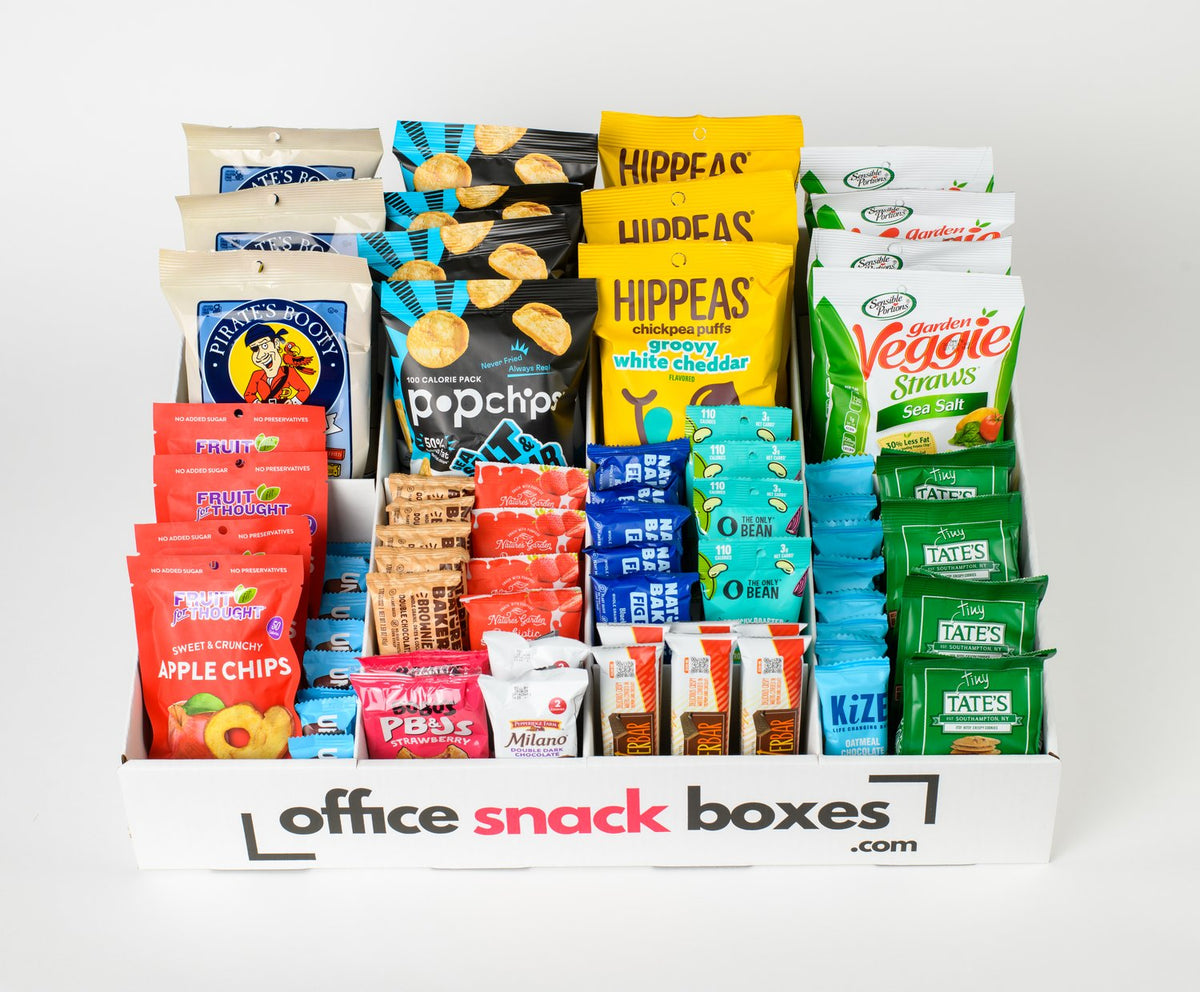
Table of Contents
- The chocolate and xylitol problem
- Nobody eats on schedule here
- What it costs
- The lobby, where everyone is stressed
- The retention argument, which is real
- Other guides
- Quick answers
The chocolate and xylitol problem
You know this better than we do, which is exactly why it belongs at the top rather than buried in a footnote.
Chocolate and xylitol are the two common snack ingredients that are genuinely dangerous to dogs, and a veterinary practice is a building full of dogs, some of them loose in a lobby, some boarding, some belonging to staff. A dropped wrapper in a break room that a boarder gets into is a bad afternoon for everyone.
Practical approach most clinics take:
- Keep chocolate out of the box entirely, or confine it to a staff area with a door that closes. It is the single easiest decision here and nobody misses it much.
- Read for xylitol in anything sugar-free, particularly gum and some protein bars. If the clinic keeps sugar-free items, they go in a drawer rather than a bowl.
- Sealed everything. Individually wrapped means no open bags to knock over, which matters in a building where a curious patient gets loose roughly monthly.
Every item we ship is individually wrapped, and because you choose each one, you can build a chocolate-free box in about five minutes at order time instead of policing a shelf forever.
Nobody eats on schedule here
Clinic days do not decompose into neat blocks. An emergency walks in, a surgery runs long, a euthanasia appointment needs the room and the time and the emotional space it deserves. Lunch becomes theoretical.
What actually gets eaten in that environment:
- One hand, thirty seconds, no prep. Bars, jerky, bagged nuts, crackers. If it needs a fork it does not get eaten.
- Real calories, not a 90-calorie snack. A tech who has been restraining animals since 7am needs food, not a gesture. Weight toward protein and substance.
- Shelf-stable, because timing is unpredictable. Whatever is there has to still be good at 8pm when the day finally breaks.
- Nothing strongly scented. You already have enough competing smells and some of your patients are nauseated.
There is also a hygiene dimension that is stricter than a normal office. Food cannot live near treatment, surgery or lab areas, so the break room is the entire permitted zone, and what sits in it has to be unambiguous. The reasoning is the same as in human clinical settings, covered in why individually wrapped wins for medical and shared spaces.
What it costs
Essentials $199, Premium $299, Deluxe $399, all 150 snacks in about 15 kinds.
| Clinic | Staff | Snacks/month | Order | Monthly |
|---|---|---|---|---|
| Single-doctor practice | 6 to 10 | about 160 | One box | $199 to $399 |
| Multi-doctor general | 15 to 25 | about 400 | Two to three boxes | $400 to $900 |
| Emergency / 24-hour | 20 to 35 | about 700 | Four to five boxes | $800 and up |
| Specialty referral | 20 to 40 | about 550 | Three to four boxes | $600 and up |
Emergency and 24-hour clinics should size noticeably higher than headcount suggests. Overnight shifts have no alternative food source at all, and the shelf is doing a job at 3am that a corporate break room never has to do.

The lobby, where everyone is stressed
A veterinary waiting room is not like other waiting rooms. People are worried, sometimes they have been crying, and they are frequently managing an animal that does not want to be there.
Most clinics should keep snacks in the back rather than the lobby, for three reasons: loose dogs, allergens around children, and the simple fact that someone waiting on a difficult diagnosis is not looking for a granola bar.
The exception worth making is longer waits. If you routinely have clients sitting for an hour or more, a small sealed selection at the front desk, handed over rather than left out, lands well. It reads as care rather than catering, and it keeps the loose-dog risk at zero because nothing is sitting at nose height.
The retention argument, which is real
Veterinary medicine has a well-documented retention problem, and technicians bear most of it. The pay is low relative to the training, the days are physically and emotionally heavy, and turnover is expensive in a field where there is a national shortage of credentialed techs.
A snack program does not fix any of that, and anyone who tells you otherwise is selling something. What it does is remove one small daily indignity: having to choose between eating and getting through the schedule.
On the days that go badly, and this profession has more of those than most, being the clinic where there is always something on the shelf is a form of looking after people that costs about a dollar per person per day. Against the cost of recruiting one credentialed tech, that is not a close call either.
Other guides
Related: medical office snack delivery for human clinics, dental practices, and feeding a team with mixed dietary needs. Tiers are on the box page and the process is on how it works.
Quick answers
What snacks are safe to keep in a veterinary clinic? Avoid chocolate entirely and check sugar-free items for xylitol. Sealed nuts, jerky, crackers, protein bars and dried fruit are all straightforward.
How much does it cost? $199 to $399 a month for a 10 to 15 person clinic. Emergency and 24-hour practices should plan for more.
Can we get a chocolate-free box? Yes. You pick every item, so it is a one-time choice at order rather than something to police.
Are the snacks individually wrapped? Every one. No open bags in a building where patients get loose.
Should we put snacks in the lobby? Usually not, because of loose animals and allergens. If your waits run long, hand something over at the desk instead of leaving it out.
How do we size for overnight shifts? Higher than headcount implies. At 3am the break room is the only food in the building.
Is there a contract? No, cancel any time.