
Medical Office Snack Delivery: Individually Wrapped
A medical office has two snack problems that a normal office does not. Your staff eats at unpredictable times because patients do not run on schedule, and anything you put in a shared or patient-facing space has to be sealed. Most snack services are built for a tech company break room and it shows.
Short answer: snack delivery for a medical office runs $199 to $399 a month for a 10 to 15 person practice, which is one box of 150 individually wrapped snacks. Individually wrapped is the part that matters here: no open bowls, no shared bags, nothing that fails an infection control conversation. Ships nationwide, no contract, and you can put it in the break room or the waiting room or both.
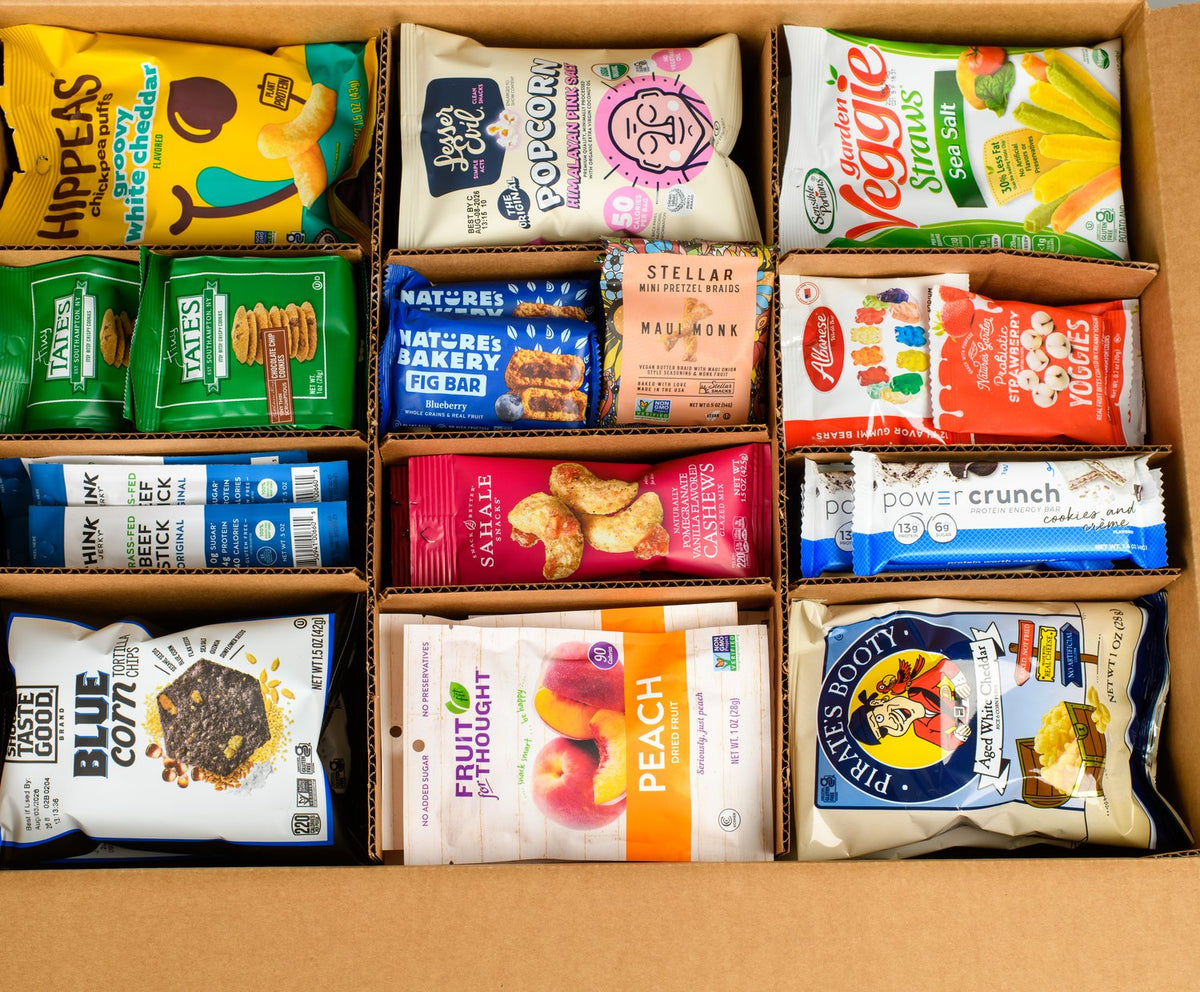
Table of Contents
- Why medical offices are different
- Individually wrapped is not a preference here
- What it costs for a practice
- What to stock by practice type
- Break room, waiting room, or both
- Snacks for people who eat between patients
- Rolling it out without adding work
- The staffing angle nobody mentions
- Quick answers
Why medical offices are different
Three things change the math compared to a normal office.
Nobody eats at noon. A front desk team, a few MAs, a couple of providers and a biller are not taking lunch together. People eat in seven-minute gaps between patients, standing up, usually at 10:40 and 3:15. That favors things you can open with one hand and finish fast, and it means the shelf gets hit all day rather than in one lunch rush.
Shared space rules are stricter. An open bowl of trail mix is fine in a startup kitchen. In a clinical setting it is a conversation you do not want to have. Everything sealed until the moment somebody eats it removes the question entirely.
Patients see some of it. If anything goes in a waiting area, it is now part of how your practice presents itself. That changes what you want it to look like, and it raises the volume because visitors eat too and they do not show up in your headcount.
Individually wrapped is not a preference here
For most offices, individually wrapped is about portion control and mess. For a medical office it is about whether the snack shelf survives contact with your own standards.
Sealed single servings mean no shared scoops, no open containers sitting out between shifts, no ambiguity about how long something has been exposed, and nothing that a patient or a surveyor can point at. It also means the shelf can sit unattended all day without anyone managing it, which matters when the person who would manage it is rooming patients.
Every snack we ship is individually wrapped. That is not a medical-specific product line, it is just how the boxes are built, which happens to make them a clean fit here. We wrote more about the reasoning in why individually wrapped wins for medical and shared spaces.
What it costs for a practice
Size on who is actually in the building, plus a bump if anything is patient-facing.
| Practice size | Staff snacks per month | What to order | Monthly cost |
|---|---|---|---|
| Solo provider, 4 to 6 staff | about 100 | One box, stretched | about $130 |
| Small practice, 10 to 15 | about 200 | One box a month | $199 to $399 |
| Multi-provider, 20 to 30 | about 400 | Two to three boxes | $400 to $900 |
| Any of the above plus waiting room | add 50 to 100 | Add a box or size up a tier | add $199 |
Medical offices tend to run higher per person than an average office because staff are in five days a week, not three. A 12 person practice that is in every day is closer to 240 snacks a month than the 150 a hybrid team needs. Plan for one and a half to two boxes, or size up and stretch. This is the main way practices under-order, and it is why the standard small office sizing runs low if you apply it here without adjusting.
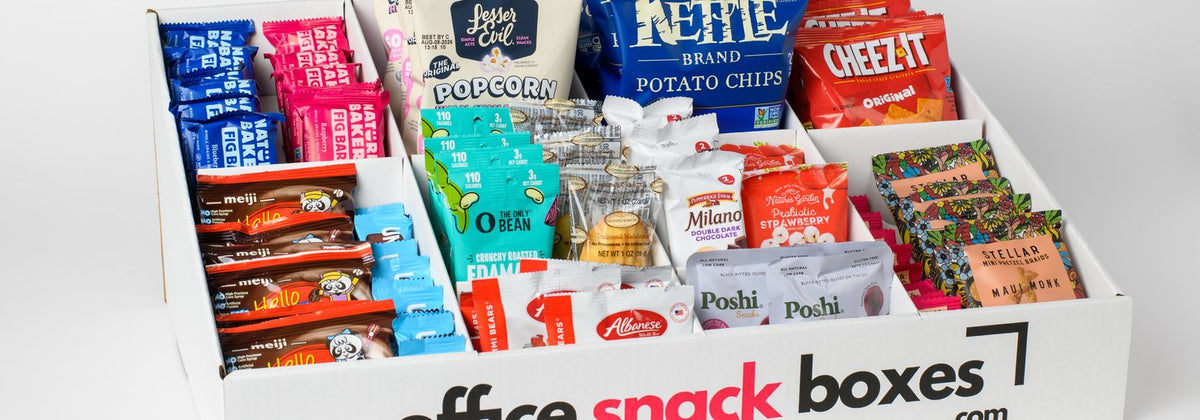
Tiers are Essentials at $199, Premium at $299 and Deluxe at $399, all 150 snacks in about 15 kinds. Practices that put anything in a patient-facing space usually go Premium or higher, because the labels are doing some work for you at that point.
What to stock by practice type
The constraints shift depending on what kind of practice you run.
Primary care and internal medicine. Long days, steady patient flow, staff who skip lunch more than they admit. Lean protein-heavy: bars, jerky, nuts. This is the setting where the afternoon crash is a real clinical-quality issue, not just a comfort one.
Dental. The obvious tension is that your staff spends all day telling people about sugar. A visibly candy-heavy break room is an awkward look even if nobody outside ever sees it. Nuts, cheese crackers, jerky and lower-sugar bars keep the shelf consistent with the message.
Pediatrics. If anything is patient-facing, allergens are the whole conversation. No nuts anywhere a child can reach, full stop. Keep the waiting area selection extremely conservative and put anything with nuts in the staff-only break room.
Urgent care. Shift work, irregular hours, people eating at 2 am. You need volume and you need things that survive being the only food available at an odd hour. Size up and check the shelf more often than a nine-to-five practice would.
Specialty and surgical. Fewer staff, longer procedures, and gaps that are either five minutes or ninety. Variety matters more than volume here, because the same six people are hitting the same shelf every day and they notice repetition fast.
Veterinary. Same shared-space constraints as human medicine, plus a waiting room where the clients are stressed and the visits run long. Sealed packaging is non-negotiable for the same reasons, and a small waiting-area selection does real work on client experience.
Break room, waiting room, or both
Break room only is where most practices start and it is the right default. Staff-facing, nobody is judging the selection, and you can lean toward what your team actually wants rather than what looks good.
Waiting room changes the calculation. Volume goes up unpredictably because every patient and every person who drove them is a potential snack. Selection gets more conservative: recognizable brands, nothing messy, nothing that leaves crumbs on your chairs. And you need a container that looks intentional rather than a cardboard box on a side table.
Both works well if you keep them separate. The mistake is running one shelf for both and watching the staff snacks disappear into the lobby by the 12th.
One practical note for waiting areas: allergens. A bowl of mixed nuts in a pediatric waiting room is a bad idea regardless of how sealed it is. Keep the patient-facing selection boring on purpose.
Snacks for people who eat between patients
What works for a seven-minute gap is different from what works at a desk.
- One-handed and fast. Bars, individually bagged nuts, jerky, crackers. Anything requiring a bowl, a spoon or two hands does not get eaten on a clinical floor.
- Protein over sugar for the afternoon. A 3 pm sugar snack on a day that ends at 6 is a trade against the last two hours. Practices that shift toward protein see fewer people fading at the end of the day.
- Nothing that smells. This sounds petty until someone microwaves fish in a small office attached to exam rooms. Shelf-stable and neutral is the rule.
- Cover the dietary spread. Clinical staff skew toward paying attention to what they eat. Gluten-free, vegan and lower-sugar options get used more in a medical office than in a typical one, and building that spread takes about five minutes once.
Rolling it out without adding work
The failure mode in a medical office is not budget, it is that everyone is busy and the box becomes nobody's job.
Pick the person, not the role. Whoever opens the mail is usually the right answer. It needs ten minutes on delivery day and nothing else. If you assign it to "the office manager" in the abstract, it competes with credentialing and prior auths and it loses.
Put it where the workflow already goes. A shelf in a back hallway nobody walks down is a shelf nobody eats from. Near the time clock, near the break room fridge, near wherever people set down their bags.
Decide the waiting room question before box one, not after. If you are going to put snacks out front, order for it from the start. Discovering in week two that the lobby ate your staff supply is how a good idea turns into a complaint.
Adjust after the first box. Whatever disappeared in the first four days, order more of. Whatever is untouched on the 25th, drop. A medical office reveals its preferences faster than most workplaces because the same people hit the same shelf every day, five days a week.
The staffing angle nobody mentions
Medical practices are competing for MAs and front desk staff against every other practice in a five mile radius, usually within a couple of dollars an hour of each other. Small quality-of-life things carry more weight than they should.
A stocked break room is not going to keep someone who is underpaid. But for someone deciding between two roughly equivalent offers, the practice where you do not have to bring your own food to get through a ten hour day is a real difference. At $199 to $399 a month it is among the cheapest retention line items you have, and unlike most of them it is visible every single day.
The comparison worth making is against the cost of replacing one MA. Recruiting, onboarding and the productivity gap while someone gets up to speed is a five-figure event at most practices. If a snack program contributes to keeping one person for an extra six months, it paid for a couple of years of itself.
It also does quiet work on the days that go badly. Every practice has afternoons where the schedule collapses and nobody eats. Being the office where there is always something on the shelf is a small thing that staff remember, and it costs about a dollar a person a day.
You can see the three tiers and what is in each on the box page, or read the ordering process on how it works. Practices worried about getting locked in should read do office snack services require contracts or minimums, which is the short answer to the question every office manager asks second. If your practice shares a building with a coworking operator or subleases space, coworking space snack delivery covers how shared common areas change the sizing.
Quick answers
Are all the snacks individually wrapped? Yes, every item. Nothing bulk, nothing that needs to be portioned out on site.
How much for a 12 person practice? Plan on $199 to $399 a month, and lean toward the higher end or a second box if your team is in five days a week.
Can we put these in the waiting room? Yes, and plenty of practices do. Budget more volume than you expect, keep the selection conservative, and watch allergens if you see kids.
Do you serve dental and vet offices too? Yes. The constraints are the same: shared space, unpredictable eating times, sealed packaging.
Is there a contract? No. Cancel any time.
Do you deliver to practices outside major metros? Yes, it ships nationwide. Route-based providers usually will not serve a 12 person practice in a suburb, which is most of why this exists.
Can we accommodate specific dietary needs? Yes. You can swap items before each box ships, so gluten-free, vegan and lower-sugar selections can be a standing part of the order rather than a special request.
How do we handle allergens in a pediatric waiting room? Keep nuts entirely out of the patient-facing selection and hold them in the staff break room instead. It is the only approach that does not depend on someone reading a label correctly.
What if our staff works overnight shifts? Size up. Urgent care and 24-hour practices go through noticeably more than a standard clinic, because the shelf is the only food source at 3 am.