
Coworking Space Snack Delivery: Sizing and Budget
Running snacks for a coworking space is a different job than running snacks for an office. In an office you are feeding a known group of people who work there. In a coworking space you are feeding a number that changes every day, some of whom are paying members, some of whom are on a day pass, and some of whom are on a tour deciding whether to sign.
Short answer: snack delivery for a coworking space runs about $199 to $399 per box of 150 individually wrapped snacks, and most spaces need one box per 30 to 40 desks per month rather than the one per 10 to 12 that a normal office uses. Members graze more than employees do, so size on peak-day occupancy and expect to adjust after month one. Ships nationwide, no contract.
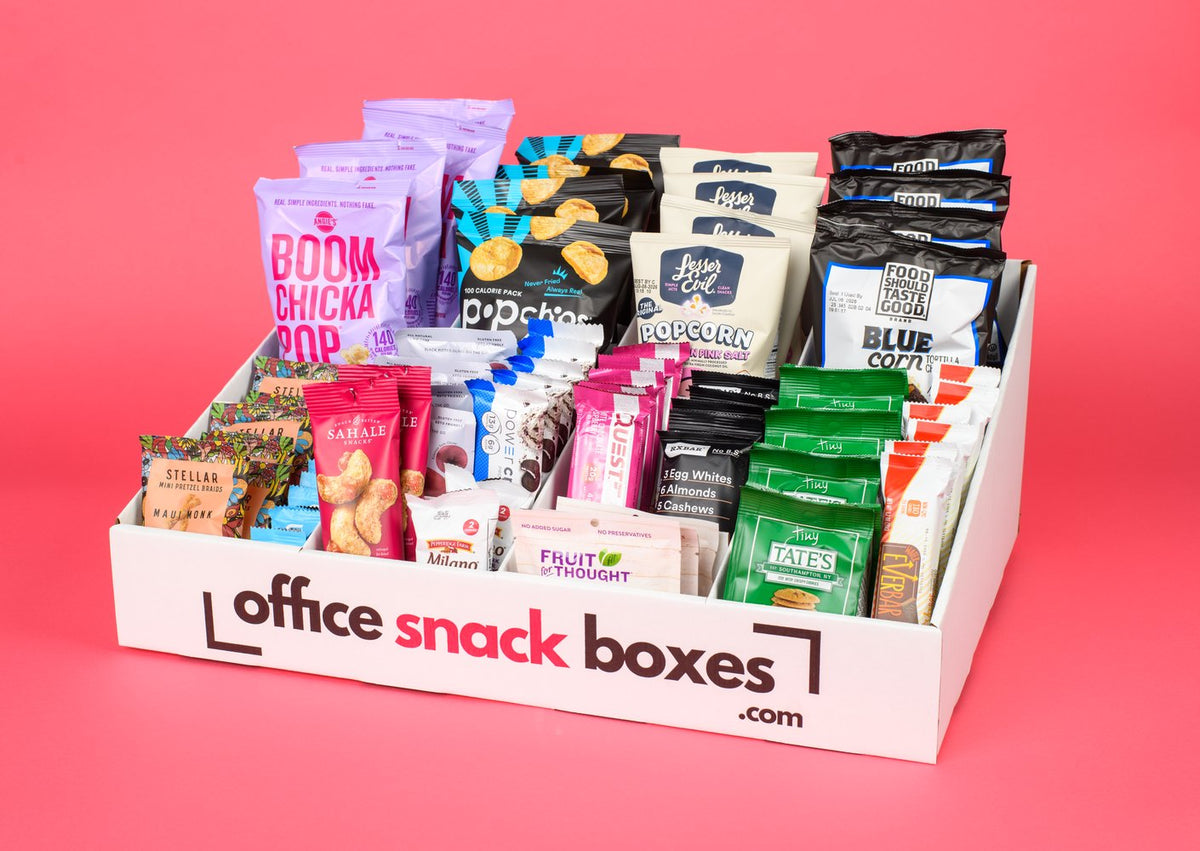
Table of Contents
- Why coworking is not just a bigger office
- How to size it when attendance moves daily
- Cost, and how to think about it per member
- Free shelf, paid shelf, or members-only
- Placement and refill logistics
- The snack shelf on a tour
- Four ways spaces get this wrong
- Quick answers
Why coworking is not just a bigger office
Four differences, and they all push the same direction: more volume, less predictability.
Attendance swings hard. A 60 desk space might have 18 people in on a Monday and 45 on a Wednesday. An office with 60 employees has roughly the same people every day. You cannot size on your member count, only on what a busy day looks like.
Members graze more than employees. Somebody at their own employer's office takes one snack and feels vaguely observed. A member who pays you $300 a month treats the shelf as part of what they bought. Consumption per person is meaningfully higher and it is not a problem, it is the product working.
It is competitive differentiation, not a perk. Your members are comparing you to the space six blocks away. The coffee and the snacks are two of maybe five things a prospective member can actually evaluate on a fifteen minute tour.
Nobody owns the shelf. In an office, someone's job description quietly includes the snacks. In a coworking space the community manager is already doing eight things, so whatever you set up has to run without supervision.
How to size it when attendance moves daily
Forget member count. Use peak-day bodies in the building.
Count the people physically present on your busiest day, not your desk count and not your membership roster. Multiply by about 20 days a month, then multiply by 1.3 because members graze more than employees. For most spaces that lands near one 150-snack box per 30 to 40 desks per month.
| Space size | Typical peak occupancy | Snacks per month | What to order | Monthly cost |
|---|---|---|---|---|
| 20 to 30 desks | 12 to 20 people | about 150 | One box a month | $199 to $399 |
| 50 to 60 desks | 30 to 40 people | about 300 | Two boxes a month | $398 to $798 |
| 100 desks | 55 to 70 people | about 550 | Four boxes a month | $796 and up |
| Multi-floor or multi-location | varies | varies | Separate order per floor | varies |
The multi-floor note matters more than it looks. One shelf on floor two does not serve floor four, it just means floor four never gets any. Order per shelf, not per building.
If your space is small enough that this feels like overkill, the small office sizing guide is the simpler version, though remember it will run about 30 percent low for a coworking crowd.
Cost, and how to think about it per member
At a 50 desk space running two boxes a month, you are at roughly $400 to $800 against a membership base paying you somewhere north of $15,000. That is 3 to 5 percent of revenue on something every member touches multiple times a week.
The comparison that actually matters is against your churn. If a member is paying $300 a month and stays one extra month because the space feels looked after, that single retained month covers most of a box. You do not need the snack shelf to be the reason anyone stays. You need it to be one of the small things that adds up to a space feeling run rather than rented.
| Space size | Monthly snack spend | Approx. monthly membership revenue | Snacks as % of revenue |
|---|---|---|---|
| 25 desks | $199 to $399 | about $7,500 | 2.7% to 5.3% |
| 50 desks | $398 to $798 | about $15,000 | 2.7% to 5.3% |
| 100 desks | $796 to $1,596 | about $30,000 | 2.7% to 5.3% |
Tiers are Essentials at $199, Premium at $299 and Deluxe at $399, all 150 snacks in about 15 kinds. Most spaces we work with run Premium, because the brand recognition does real work when a member is deciding whether this place is worth what they pay. If your space competes on price rather than experience, Essentials is a perfectly reasonable call and nobody will hold it against you.
Free shelf, paid shelf, or members-only
Free and open is the simplest and it is what most spaces land on. Everything is included, nobody tracks anything, the shelf is part of the membership. The cost is predictable because you control what you put out, not what people take.
Paid shelf with an honor box recovers some cost and creates a small amount of friction that nobody enjoys. It also turns your community manager into a person who deals with the honor box. Most spaces that try this go back to free within a few months.
Members-only with day passes excluded sounds fair and is unenforceable. If the shelf is in a common area, it is open. Either accept that day pass users eat some snacks or put the shelf somewhere only members can reach, which usually defeats the point.
Our honest recommendation is free and open, sized properly. The enforcement cost of any other model exceeds the snacks you save.
Placement and refill logistics
Where the shelf lives determines how much of it gets eaten and how much work it creates.
Put it on the path, not in the kitchen. The kitchen is where people go when they already decided they want something. A shelf near the coffee, the printer or the main walkway gets three times the traffic because it catches people who were not thinking about it.
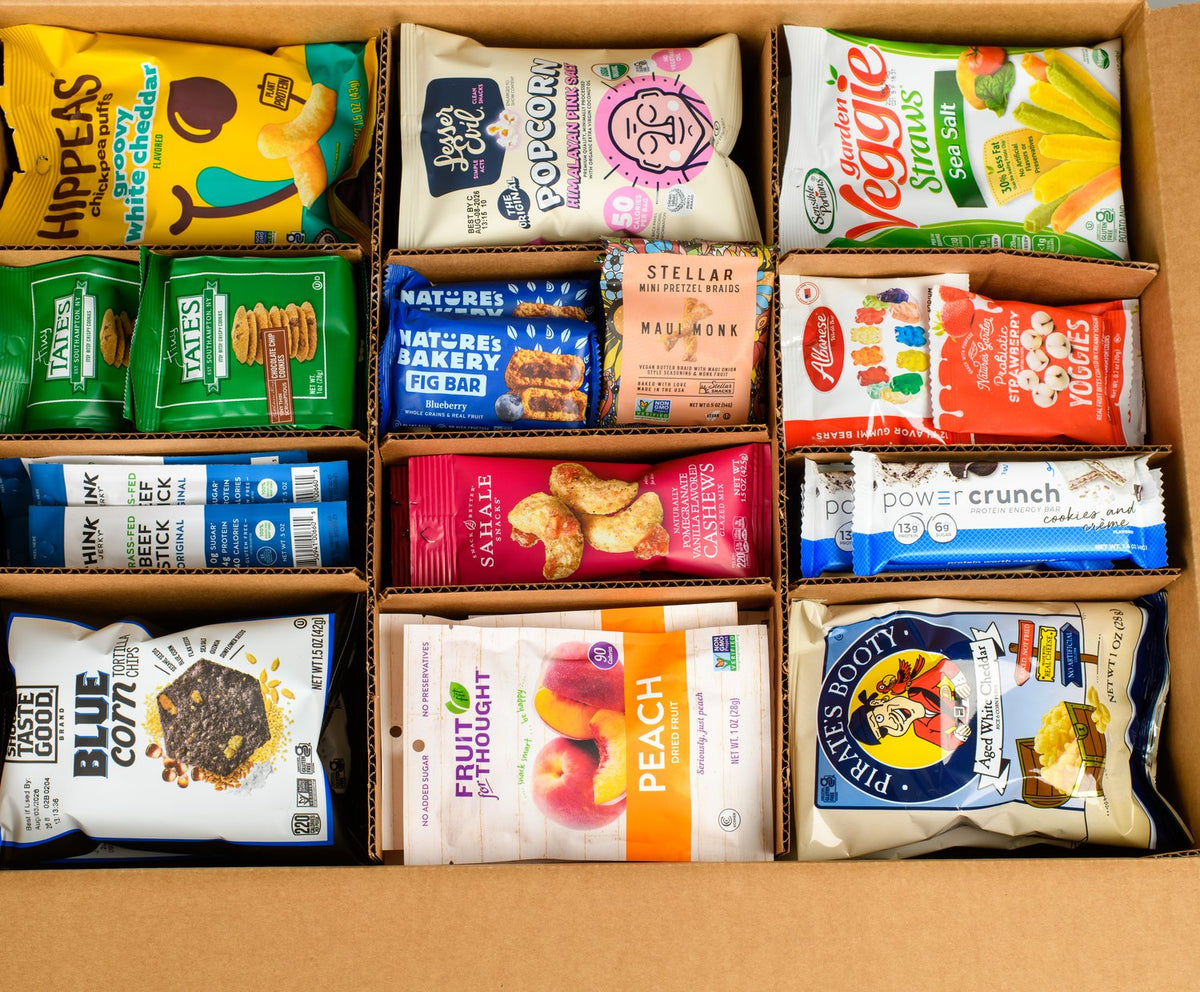
Do not put the whole box out. Set out a third to a half, keep the rest in a cabinet, and top up. A shelf that is always partly full reads as maintained. A shelf that is overflowing on the 3rd and empty on the 19th reads as neglected, even though the total snacks are identical.
Make the container look deliberate. A cardboard shipping box on a side table undoes the work. A basket, a tray, anything with an edge. This is thirty dollars once and it changes how the whole thing reads on a tour.
Assign the top-up to a recurring task, not a person's memory. Two minutes, twice a week, on whoever opens. If it depends on someone noticing, it will be empty the week your community manager is on vacation, which is also the week you have three tours booked.
Split the delivery if your shelf bottoms out. A box on the 1st that runs dry on the 22nd means a thin week every single month. Two smaller deliveries beat one large one for spaces with steady traffic.
The snack shelf on a tour
A prospective member walks through, sees maybe six things they can form an opinion about, and two of them are edible. An empty or sad shelf on a tour day is worse than no shelf, because it reads as a space that used to care.
Practical version: whoever gives tours should know where the backup stock is, and the shelf should get a glance before a tour the way the conference room does. That is thirty seconds and it is the difference between the shelf helping and the shelf hurting.
It is also one of the few amenities a visitor can verify on the spot. Anyone can say the community is great. A full, varied, obviously-maintained shelf is evidence, and it is evidence that costs you about $10 a day.
Four ways spaces get this wrong
Sizing on desks instead of bodies. The single most common error. A 60 desk space at 60 percent utilization is a 36 person snack problem, not a 60 person one, and a 60 desk space at 90 percent on Wednesdays is a 54 person problem two days a week.
Same box every month. Members are there every day. They notice repetition faster than office employees do, and a shelf that has looked identical since March stops registering as a benefit. This is the whole argument for rotating the box every order.
Ignoring the dietary spread. A coworking space has a wider range of people in it than any single company does. Gluten-free, vegan and lower-sugar options are not edge cases here, they are a meaningful share of your members. Feeding a group with mixed dietary needs covers how to cover it without overthinking it.
Letting it run empty and not noticing. Nobody complains about a snack shelf. They just stop expecting anything from it, and it quietly stops being a reason to stay.
If you want the operational version of this, we wrote one: how to run snacks for a coworking space. And if you host resident medical or therapy practices in your space, medical office snack delivery covers the shared-space constraints those tenants work under.
Quick answers
How much does a coworking space spend on snacks? Roughly $199 to $399 per 150-snack box, with most spaces needing one box per 30 to 40 desks per month. A 50 desk space is typically $400 to $800.
How do I size it if attendance changes every day? Use peak-day headcount, not desk count or member count, then add about 30 percent because members eat more than employees.
Should snacks be free to members? Yes, in almost every case. Honor boxes and members-only rules cost more in hassle than they recover in snacks.
Can I order for multiple floors or locations? Yes, and you should order per shelf rather than per building. One shelf does not serve a floor it is not on.
Is there a contract? No, cancel any time. Useful for spaces with seasonal occupancy swings.
Do you ship to spaces outside major cities? Yes, nationwide. Smaller-market coworking spaces are usually too small for route-based providers to bother with.
How fast can we start? Boxes ship within a few business days. Most spaces have the first one on the shelf inside a week.
What percentage of revenue should snacks be? Most spaces land between 2.7 and 5.3 percent of membership revenue, and that range holds steady whether you have 25 desks or 100.
How do we stop day pass users from eating everything? You mostly do not, and the attempt costs more than the snacks. Size for total bodies in the building rather than for members only.