
Office Snack Delivery Austin
It is 3pm in August. It is 104 outside and the asphalt in the lot is doing that shimmering thing. The nearest food is a seven minute walk, which in this weather is not a walk, it is a decision with consequences.
Nobody is leaving. Whatever is in the kitchen is what the team eats, from roughly May through September.
Short answer: office snack delivery in Austin runs $199 to $399 a month for a 10 to 15 person team, one box of 150 individually wrapped snacks, free shipping, no contract. The Austin adjustment is that your heavy season is summer rather than winter, which is backwards from most of the country, and that a lot of Austin companies grew faster than their office did.
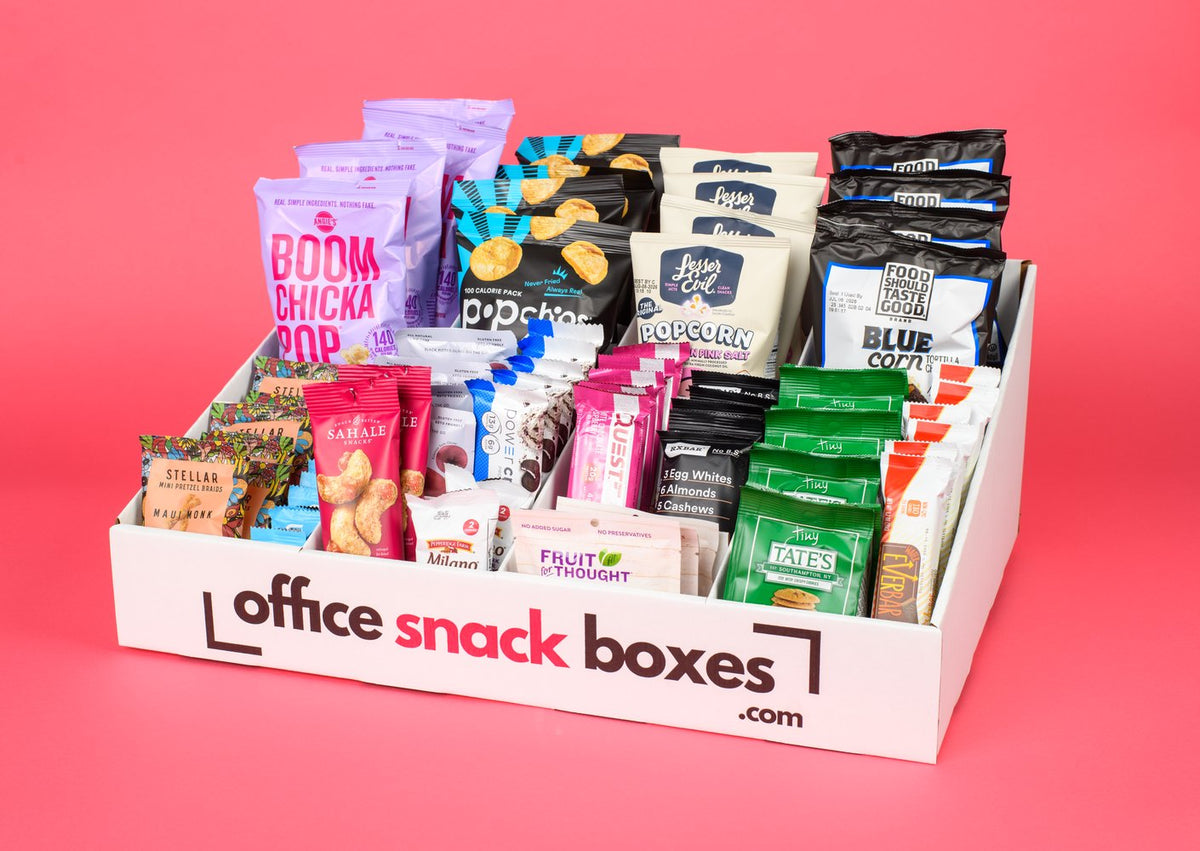
Table of Contents
- Summer is the heavy season here
- What it costs
- Companies that outgrew their office
- East Austin, downtown, the Domain
- March, and planning around it
- Other markets
- Quick answers
Summer is the heavy season here
Most of the country snacks more in winter because going outside is unpleasant. Austin runs the same logic on the opposite calendar.
From May through September, and increasingly into October, the walk to anywhere is a genuine deterrent. Consumption climbs, people graze more through the afternoon, and the office kitchen becomes the default rather than the fallback.
There is a second effect worth knowing: people eat differently in heat. Heavy, dense snacks move slower in August. What actually gets eaten is lighter and saltier, plus anything that pairs with the enormous amount of water your team is drinking. If your box is identical in January and August, the August one will have leftovers in it.
Practical version: size to summer, lighten the selection May through September, and let the cadence stretch a little in the mild months. Austin's winter is short enough that it is the exception, not the baseline.
What it costs
Essentials $199, Premium $299, Deluxe $399, all 150 snacks in about 15 kinds.
| Team | Days in | Snacks/month | Order | Monthly |
|---|---|---|---|---|
| 8 to 10 | 3 | about 120 | One box | $199 to $399 |
| 12 to 18 | 3 | about 190 | One box | $199 to $399 |
| 25 to 30 | 3 to 4 | about 400 | Two to three boxes | $398 to $1,197 |
| 50 | 4 | about 800 | Five boxes | $995 and up |
At $199 for 150 snacks you are at about $1.33 a snack delivered. The comparison here is usually a lunch run, which in Austin means somebody drives, which means thirty minutes minimum and a parking situation.
Companies that outgrew their office
Austin has an unusual concentration of companies that doubled headcount faster than they changed address. A 12 person lease holding 22 people. A floor that was roomy in 2024 and is now a hot-desking situation.
Two consequences for a snack program:
Your attendance number is stale. Most office managers here are sizing on a headcount from two quarters ago. Count bodies on a Wednesday rather than reading the org chart.
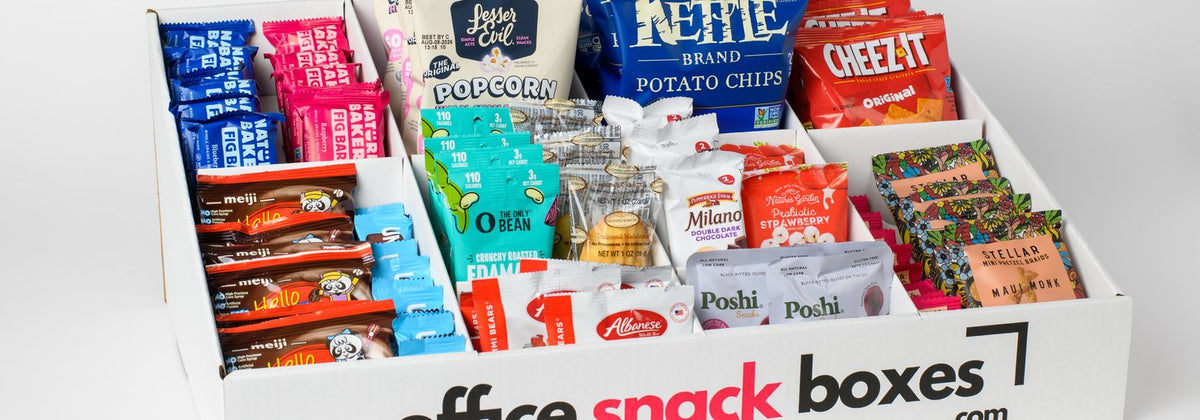
Storage is the constraint, not budget. A 150-snack box needs a shelf, and in a crowded office that shelf is already holding something. The move is to put out a third and keep the rest in a cabinet, which also makes the shelf look maintained all month rather than full on the 2nd and bare on the 20th.
The flip side of fast growth is that these are exactly the companies where nobody owns the kitchen. There is no office manager, so it lands on a chief of staff or the first ops hire, competing with actual work. A subscription is mostly valuable here because it stops being a recurring decision.
East Austin, downtown, the Domain
We ship free across the metro. The character changes by area:
- East Austin. Converted warehouses and small-floor offices full of 10 to 40 person companies. Storage is usually fine, and this is the single densest pocket of companies too small for a route vendor to quote seriously.
- Downtown. Towers with mailrooms and loading docks. Put the building's receiving address on the subscription rather than your suite.
- The Domain and north. Office parks with real kitchens and real storage. Easiest logistics in the metro.
- South and southwest. Spread out, which means the walk-to-food option is usually off the table year round, not just in summer.
Across all of them: a 15 person company is below the line where pantry services and micro-market vendors will engage, because their model needs a few hundred people in one building. That is the gap a shipped box fills, and it is why market size is irrelevant to whether this works.
March, and planning around it
For a couple of weeks in March, Austin stops behaving like a normal city. Depending on your company, that means either the office is empty because everyone is at events, or the office is unusually full because you have visitors in town.
Either way it is not a representative month, and it is a bad one to use for setting your baseline. If you are starting a snack program, pick a boring month to calibrate on and adjust from there.
Same advice applies to the one or two weeks a year the city gets a genuine freeze and nothing moves. Rare, memorable, not a planning input.
Other markets
Free shipping to all of these, with sizing advice that shifts by city: Denver, New York City, Boston, San Francisco Bay Area and Los Angeles.
Quick answers
Do you deliver office snacks in Austin? Yes, across the metro including East Austin, downtown, the Domain, Round Rock and Cedar Park. Free shipping.
How much does office snack delivery cost in Austin? $199 to $399 a month for 10 to 15 people, roughly $20 to $30 per person.
When is the heavy season? Summer. May through September is when nobody walks anywhere, which is the opposite of most of the country.
Should the box change in summer? Lighten it. Dense, heavy snacks move slowly in August; lighter and saltier items move faster.
Is there a minimum office size? No. That is the main difference from the pantry vendors that need a few hundred people in a building.
We grew a lot this year. How do we size? Count people in the office on a Wednesday, not headcount on the org chart. Those numbers have diverged for most Austin companies.
Is there a contract? No, cancel any time, which matters in a market where headcount moves quickly.