
Office Snack Delivery New York City
Here is the New York version of the office snack problem. Somebody decides the team needs snacks. There is no car. There is no Costco you would willingly travel to. So the office manager walks to the deli on the corner, buys thirty dollars of individual bags, and comes back having solved roughly one afternoon.
Repeat twice a week, forever, at Manhattan prices.
Short answer: office snack delivery in New York City runs $199 to $399 a month for a 10 to 15 person team, one box of 150 individually wrapped snacks, free shipping, no contract. The New York wrinkles are logistics rather than price: your building may want a certificate of insurance from carriers, your kitchen is the size of a closet, and whoever sits nearest the mailroom is about to become the snack person whether they volunteered or not.
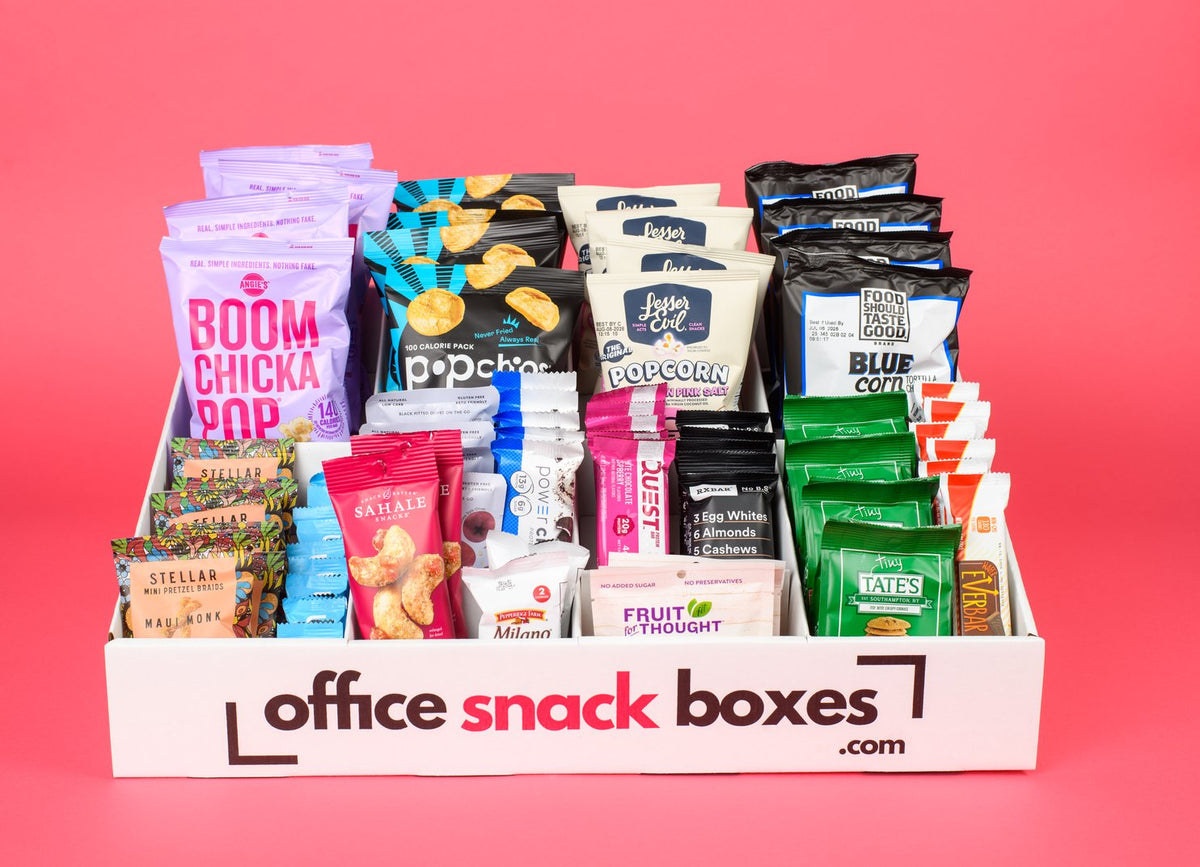
Table of Contents
- The deli math, done properly
- What it costs
- Freight, mailrooms and the COI question
- Your kitchen is four feet wide
- Midtown, FiDi, Flatiron, Brooklyn
- Other markets
- Quick answers
The deli math, done properly
Nobody runs this number, so here it is. A single bag of chips at a Midtown deli is $2.50 to $4. A protein bar is $3.50 to $5. Buying snacks for a 12 person office a few times a week at deli prices lands somewhere north of $400 a month, and that is before you count the forty minutes a week somebody spends acquiring them.
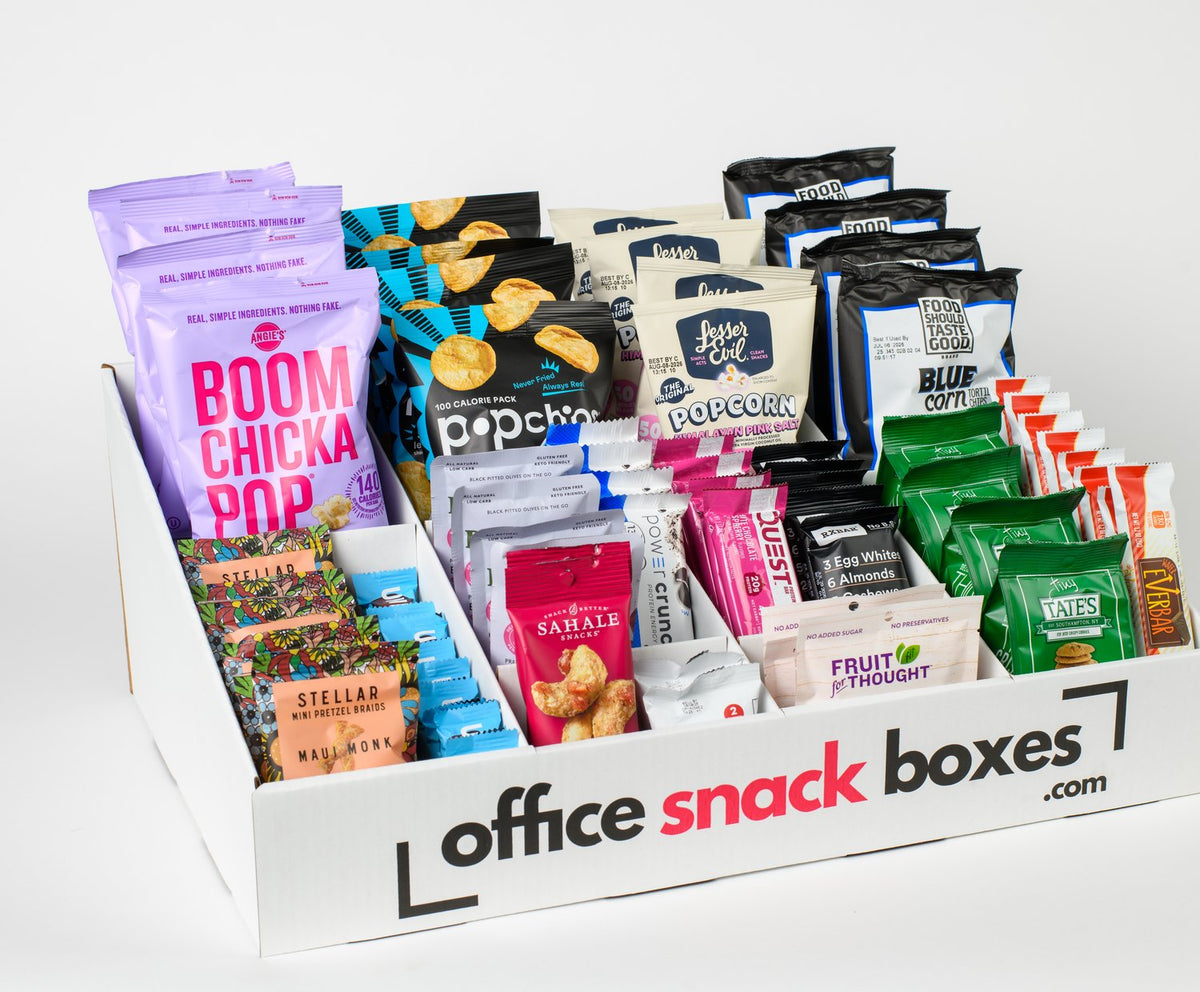
A 150-snack box is $199. That is about $1.33 a snack delivered to your floor.
The time is the bigger number anyway. In most cities the snack run is a car trip. Here it is a human being walking several blocks carrying bags, which is why New York offices tend to under-stock: the acquisition cost is physical and it falls on one person.
What it costs
Essentials $199, Premium $299, Deluxe $399. All 150 snacks, about 15 kinds, the tier changes what is in the box rather than how much.
| Team | Days in | Snacks/month | Order | Monthly |
|---|---|---|---|---|
| 8 to 10 | 3 | about 120 | One box | $199 to $399 |
| 12 to 15 | 3 to 4 | about 190 | One box | $199 to $399 |
| 25 | 4 | about 420 | Three boxes | $597 to $1,197 |
| 40 to 50 | 4 | about 750 | Five boxes | $995 and up |
New York offices run more in-person days than San Francisco does, so do not borrow Bay Area sizing. Four anchor days is common here where three is the norm out west, and that is a 30 percent difference in consumption.
Freight, mailrooms and the COI question
This is the genuinely New York part and it catches people out.
Big buildings route everything through a loading dock and a mailroom. If yours does, put that delivery address on the subscription rather than your suite, and tell the mailroom it is recurring. An unexpected monthly box sits in receiving for a week and then somebody emails you about it.
Some buildings want a certificate of insurance from vendors making deliveries. That requirement is aimed at contractors and furniture crews, not at a carrier dropping a parcel, so a shipped box almost never triggers it. It is worth knowing because it is the thing that kills route-based snack vendors in Class A buildings: they need a person badged in monthly, which means COI, security clearance and a standing appointment. A box in the mail needs none of that.
Freight elevator hours exist. Again, not usually relevant to a parcel, but it is why your building's approved vendor list is short.
Your kitchen is four feet wide
Square footage here costs what it costs, so the pantry got sacrificed. The practical consequence: 150 snacks arriving at once needs somewhere to live, and it is not going to be the counter.
What works in small New York offices:
- Put out a third, store the rest. A shelf that is always partly full reads as maintained. A counter buried on the 3rd and bare on the 19th reads as neglected, with identical total snacks.
- A drawer or a cabinet is enough. The box is about the size of a case of paper.
- Put the visible portion on the path, near the coffee or the printer, not tucked in the kitchen where only people who already decided they were hungry will find it.
If your team is under eight people, the 5 person office snack guide is the tighter version of all this.
Midtown, FiDi, Flatiron, Brooklyn
We ship free to all five boroughs and across the river. The texture changes by neighborhood more than the price does.
Midtown and FiDi are the Class A tower story: mailroom, loading dock, approved vendor list. Easiest place for a shipped box to beat a route vendor, because the route vendor cannot get in the building without paperwork.
Flatiron, Chelsea, SoHo is where most of the 10 to 40 person companies are, in older buildings with a freight elevator and a front desk. Simplest case: a parcel arrives, somebody signs, done.
Brooklyn, DUMBO and Williamsburg skew toward converted industrial space with actual storage, which is the one logistical advantage Brooklyn has over Manhattan in this particular conversation.
Across all of them the same thing is true: a 14 person company is below the headcount where a pantry service will quote you seriously, and that is the gap this fills.
Other markets
Free shipping everywhere and the sizing advice genuinely shifts by city: Boston, Austin, Denver, San Francisco Bay Area and Los Angeles. Offices in more than one? Order a box per site, not one for the company.
Quick answers
Do you deliver office snacks in NYC? Yes, all five boroughs plus Jersey City and Hoboken. Free shipping.
How much does office snack delivery cost in New York? $199 to $399 a month for 10 to 15 people, roughly $20 to $30 per person.
Is it cheaper than buying at the deli? Considerably. About $1.33 a snack delivered against $2.50 to $4 a bag at a Midtown deli, and nobody has to carry it.
Does my building need a COI? Almost never for a parcel delivery. That requirement is what blocks route-based vendors, not shipped boxes.
Where should the box be delivered? Your building's mailroom or loading dock if it has one, and tell them it recurs monthly.
We have no kitchen space. Put out a third and keep the rest in a cabinet. The box is about the size of a case of paper.
Is there a minimum office size? No, which is the main difference from the pantry services that want a few hundred people in the building.