
Office Snack Delivery Seattle
It is November 14th in Seattle. The sun set at 4:31. It is doing that thing where it is not really raining but everything is wet anyway. Your team has been heads-down since two and the nearest coffee shop is four blocks away, which in this weather is a commitment.
Nobody is going outside. Whatever is in that cabinet is dinner-adjacent now.
Short answer: office snack delivery in Seattle runs $199 to $399 a month for a 10 to 15 person team, one box of 150 individually wrapped snacks. Free shipping across Seattle and the Eastside, no contract. The local adjustment is seasonal and it is bigger than people expect: plan on 30 to 50 percent more consumption from roughly October through April, because that is when leaving the building stops being a thing anyone does voluntarily.
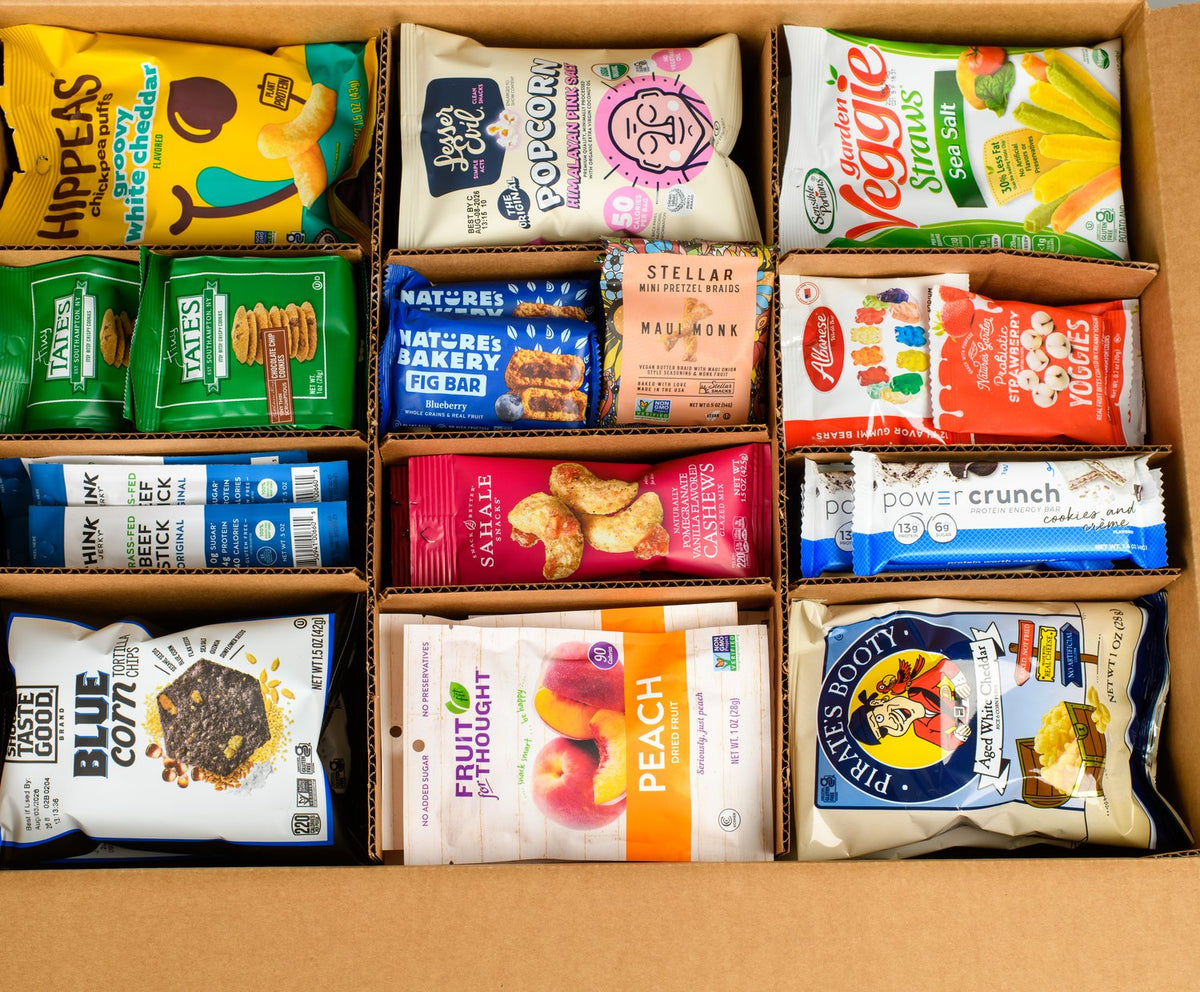
Table of Contents
- The Big Dark is a budgeting problem
- What it costs, summer versus winter
- SLU, Fremont, Georgetown, and the Eastside
- Competing with a campus cafeteria on $199 a month
- Building a shelf for a 4:30 sunset
- Other West Coast markets
- Quick answers
The Big Dark is a budgeting problem
Locals have a name for the stretch from October to April, and it is the single most useful thing to know about running a snack program in this city. Consumption here is not flat across the year. Not even close.
October through April: people stay in. It is dark by late afternoon for a long chunk of it, it is wet, and the mental math on walking out for something comes out differently every single time. Offices routinely run 30 to 50 percent above their summer number.
May through September: Seattle turns into the best city in the country and everyone remembers it. People eat lunch outside, walk at 3pm, leave early on Fridays. The same box lasts noticeably longer.
Two sane ways to handle it. Hold your box size steady and let the cadence stretch in summer (every six weeks instead of four), or size for winter and accept some slack in August. What does not work is sizing during that glorious stretch in July and then being confused in November when the shelf is stripped by the 15th.
What it costs, summer versus winter
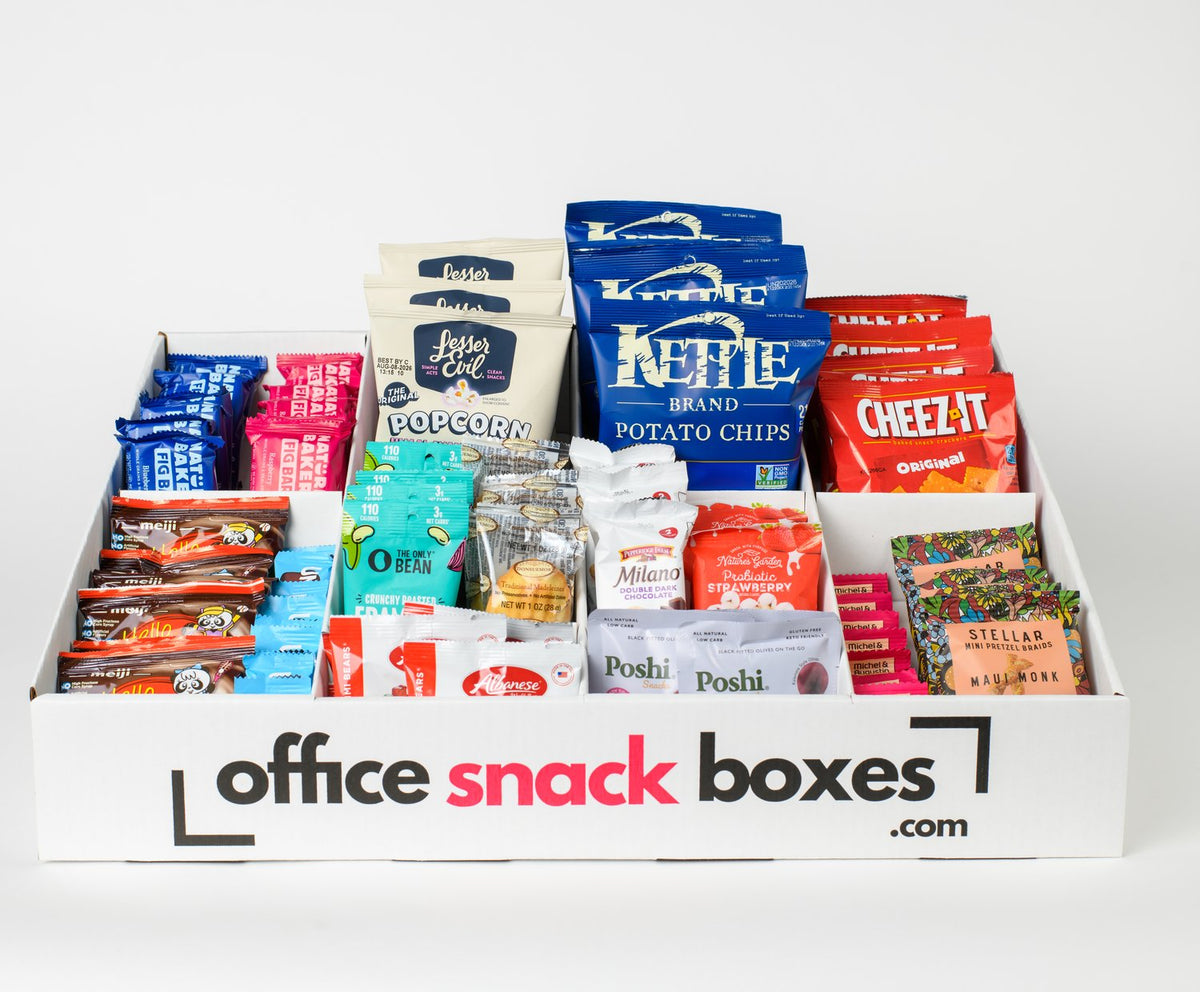
Essentials $199, Premium $299, Deluxe $399. All 150 snacks, about 15 kinds. The tier changes what is in the box, not how much.
| Team | Summer | Winter | Monthly range |
|---|---|---|---|
| 8 to 10 | Box every 6 weeks | Box every month | $130 to $399 |
| 12 to 15 | One box a month | One box plus a top-up | $199 to $599 |
| 25 | Two boxes | Two to three boxes | $398 to $1,197 |
| 40 | Three boxes | Four to five boxes | $597 and up |
That works out to about $1.33 a snack delivered. The comparison everyone in this city already has in their head is the coffee run, which is $7 to $9 once you have added something to eat, takes fifteen minutes, and involves getting wet.
SLU, Fremont, Georgetown, and the Eastside
We ship to all of it. Seattle proper, Bellevue, Redmond, Kirkland, Tacoma, Everett. Free, and no route required.
The geography does change one practical thing. Downtown and SLU offices tend to be smaller floors in buildings where everything goes through a front desk, so the question is where 150 snacks live once they arrive. A box is roughly the size of a case of paper and it wants a shelf or a cabinet, not a corner of the conference room where it slowly becomes furniture.
Eastside offices in Bellevue, Redmond and Kirkland are more often suburban office parks with actual storage and a proper kitchen. Easier.
The bigger point is who does not serve you. Route-based pantry vendors in this market concentrate on the large employers and the buildings stacked with them, because a van stop has to pay for itself. A 16 person company in Fremont or Georgetown or Ballard is below that line, and the answer is usually a polite no. Shipping a box does not have that constraint.
Competing with a campus cafeteria on $199 a month
Seattle has an unusual density of small companies orbiting enormous ones. Vendors, contractors, agencies, startups founded by people who left. Those companies are 10 to 40 people and they are hiring against employers with famously good in-office food.
So you inherit an expectation you did not set. Someone joining your 18 person company from a campus down the street has a baseline, and it is not an empty cupboard.
You are not matching a subsidised cafeteria on $199 a month and nobody sane expects you to. But the gap that actually registers is not the one between your kitchen and theirs. It is the gap between nothing and a stocked, varied shelf, and that gap is the cheapest thing you will ever buy in a compensation conversation.
Same for retention in a market where a recruiter call is a weekly occurrence. Snacks will not keep anyone who wants to leave. They are one of a dozen small signals that the place is run properly, and unlike most of those, this one is visible every single day.
Building a shelf for a 4:30 sunset
- Protein over sugar, especially after 2pm. A sugar hit at 3pm on a day that has already gone dark buys you twenty minutes and costs the rest of the afternoon. Bars, jerky, nuts.
- Anything that pairs with a hot drink gets eaten. The office kettle does enormous work here from November on. Biscuits, crackers, nuts sit right next to that behaviour.
- Cover the dietary spread properly. This market reads labels. Gluten-free, vegan and lower-sugar move faster here than the national average, and covering mixed dietary needs is one pass through the catalogue, not a project.
- Variety beats volume in a small office. Fifteen people hitting the same shelf five days a week clock repetition fast.
To start: count who is in on a normal day, multiply by days in, pick a tier. Ordering between October and April? That is your real baseline. Ordering in July? Assume you will tighten the cadence by autumn. Then adjust after box one, because the first box is a guess and the second should not be.
Tiers on the box page, process on how it works, general sizing in small office snack delivery. Running a clinic or dental practice instead of an office? Medical office snack delivery covers the shared-space rules.
Other West Coast markets
Free shipping to all of these, and the local advice genuinely differs, so start where your team is: San Francisco Bay Area, Los Angeles, San Diego, and Portland.
Quick answers
Do you deliver office snacks in Seattle? Yes, across Seattle and the Eastside including Bellevue, Redmond, Kirkland, Tacoma and Everett. Free shipping.
How much does office snack delivery cost in Seattle? $199 to $399 a month for 10 to 15 people, roughly $20 to $30 per person.
Should we order more in winter? Yes. Most offices here run 30 to 50 percent higher from October through April.
Is there a minimum office size? No, which is the main difference from route-based pantry services that need a big building to justify the stop.
Do you deliver outside Seattle proper? Anywhere in Washington. Smaller-market offices are usually exactly the ones local vendors will not quote.
Is there a contract? No, cancel any time, and skip or stretch a shipment when summer slows you down.
Where does a box go in a small downtown office? It is about the size of a case of paper. A shelf or cabinet, ideally on the path between the door and the coffee.